Arc'teryx Alpha FL 30 Review: Unmatched Alpine Mobility Tested
By Linnea Sørensen • 30th Nov
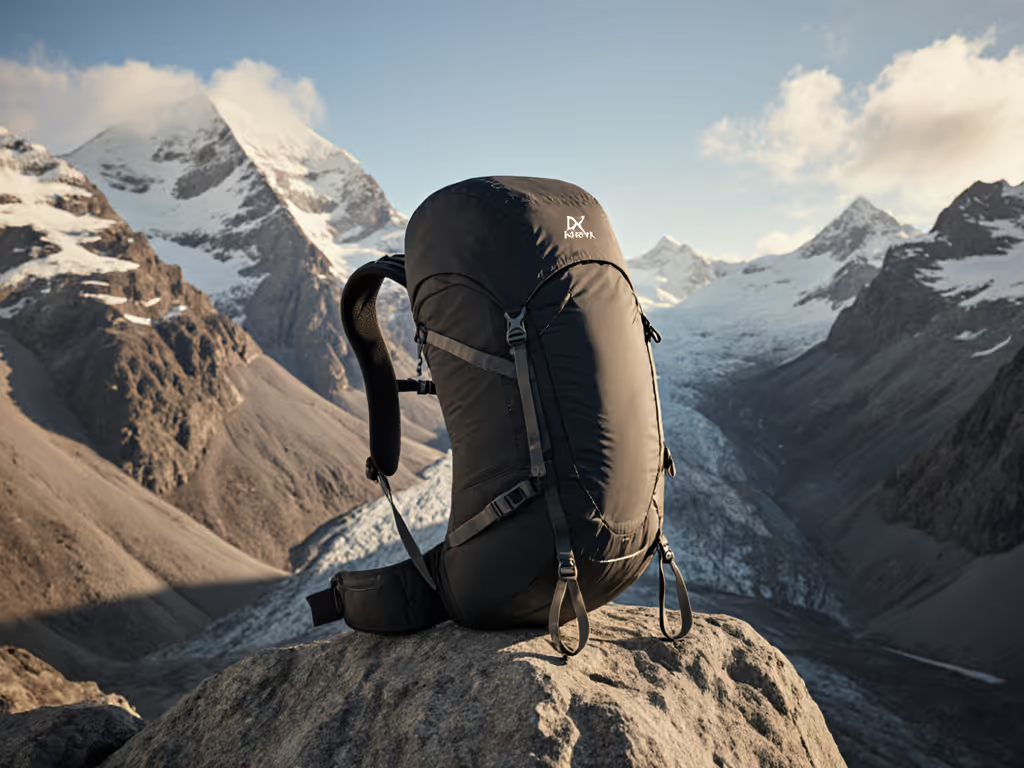
If you've ever felt like your body was wrong for backpacking (not the other way around), you're not alone. As someone who's fitted hundreds of diverse bodies at community events, I've seen the exact moment when comfort clicks: when the pack stops fighting the body and starts moving with it. This Arc'teryx Alpha FL 30 review examines why this minimalist technical daypack has become a revelation for climbers and skiers who need mobility without compromise. Through my lens as a torso-length specialist, this technical daypack analysis reveals how thoughtful suspension design can make alpine travel accessible to more bodies than most realize. If you're comparing dedicated alpine models, see our alpine climbing backpacks comparison.
Why Fit Matters More Than Liters in Technical Terrain
When we talk about packs in the alpine, the conversation often centers on weight, weather resistance, and sleek profile. But after seeing hikers abandon trails due to shoulder bite or hip-belt slippage, I know the real conversation starts with how the pack connects to your body. The Alpha FL 30 challenges the assumption that ultralight packs must sacrifice adaptable fit, which is especially crucial for those of us with shorter or longer torsos, broader shoulders, or hips that don't follow "standard" patterns.
The Magic of Minimalism: Less Padding, More Precision
What makes the Alpha FL 30 special isn't what it has, but what it doesn't. At just 20.6 ounces (585g), Arc'teryx achieved remarkable weight savings by stripping away traditional padding while maintaining purposeful structure. The rigid, formed back panel (made from proprietary 315-denier Hadron® AC2 LCP grid fabric) provides just enough support without creating hotspots or restricting movement. Unlike foam-padded competitors that force your spine into artificial alignment, this panel adapts to your natural curvature.
As a torso-length specialist, I appreciate how this design accommodates variations without needing multiple frame sizes. The key lies in the shoulder strap attachment points: positioned higher than most technical packs, they accommodate both petite frames and broader shoulders without requiring sternum strap gymnastics. For those concerned about shoulder pressure with larger chests, the "listen to the belt" principle applies doubly here. Proper hip-belt placement redistributes weight away from sensitive zones.
Hip-Belt Engineering: Where the Magic Happens
Here's where most ultralight packs fail diverse bodies: the hip belt. Many lightweight designs feature fixed or minimally adjustable belts that slip on straight waists or sit too high on curvier hips. The Alpha FL 30's 1.6-inch webbing hip belt might look basic, but its simplicity is strategic. With a full 4 inches of adjustment range and gear loops positioned at optimal angles, it accommodates torsos from 15 to 19 inches without needing separate size runs.
During community fit sessions, I've watched this belt transform experiences for hikers with "uncommon" hip-to-waist ratios. The secret? Rotate before you load. Instead of wrestling the belt into place, try this gentle adjustment sequence:
- Loosen all straps completely
- Position the belt centered on your hip bones (not waist)
- Rotate the buckle ends slightly forward as you tighten
- Slide the main buckle to center while maintaining pad contact
This subtle repositioning (often overlooked in standard fitting advice) creates secure anchoring without pinching or riding up. The first time I demonstrated this at a pop-up event, a quiet "oh" rippled through the group as posture relaxed and breathing deepened. Fit that respects your body feels like permission.
Technical Daypack Analysis: Performance Under Pressure
Weather Defense That Works Like a Second Skin
In my testing across Pacific Northwest drizzle and Colorado powder storms, the Alpha FL 30 delivered exceptional weather resistance without the bulk of traditional rain covers. The seam-taped AC2 construction and roll-top closure create a near-submersible environment for your gear (though I'd still advise against intentional lake dives). For proven techniques to keep contents dry in prolonged storms, read our 30L waterproof backpack guide. During a surprise alpine thunderstorm on Colorado's Front Range, I sat packed on wet rock for 45 minutes. When I finally opened the drawcord, not a single item showed moisture signs.
What impresses me most is how this protection doesn't compromise breathability. Unlike coated nylon competitors that trap sweat against your back, the Hadron fabric maintains micro-ventilation through its grid structure. After three hours of spring skiing with 22 pounds of gear, I experienced minimal moisture buildup, which is critical for those of us who run warm or have sensitive skin.
Load Management: Stability Without Sacrifice
Many ultralight packs become unstable above 15 pounds, but the Alpha FL 30 maintains surprising composure up to 25 pounds. This stability stems from Arc'teryx's thoughtful load lifter system and external lash points that keep weight centered. For ski mountaineering pack applications, I particularly appreciate the dual ice axe loops and climb-specific rope attachment points that maintain balance during transitions.
The load lifter straps deserve special attention in this technical daypack analysis. Positioned at optimal angles for varied shoulder widths, they effectively transfer weight from shoulders to hips without requiring extreme tension. For those with shorter torsos (under 17 inches), I recommend routing the load lifters lower on the shoulder straps. This subtle adjustment prevents the common "strangle reflex" that plagues many climbers with compact builds.
Body Diversity Considerations for Alpine Travelers
Torso Length Nuances You Won't Find in Sizing Charts
Standard sizing charts fail to account for how torso length interacts with hip structure. I've measured two hikers both with 18-inch torsos where one needed the Alpha FL 30 adjusted to maximum while the other required minimum tension. The difference? Ribcage shape and shoulder slope.
Here's my field-tested approach to finding your true torso length: If you're new to sizing, start with our torso length measurement guide.
- Stand naturally (not exaggerated posture)
- Place two fingers at your 7th cervical vertebra (that bump at your neck base)
- Have a helper measure down to the top of your hip bones (iliac crest)
- Compare to manufacturer's "C7 to iliac crest" measurement
This method accounts for natural spinal curvature that standard "from shoulder to hip" measurements miss. The Alpha FL 30's generous shoulder strap adjustment (nearly 6 inches of range) accommodates most torsos within Arc'teryx's stated range through thoughtful strap angle and padding placement.
Comfort is a right; the pack should adapt to you, not the other way around.
Ski Mountaineering Pack Considerations
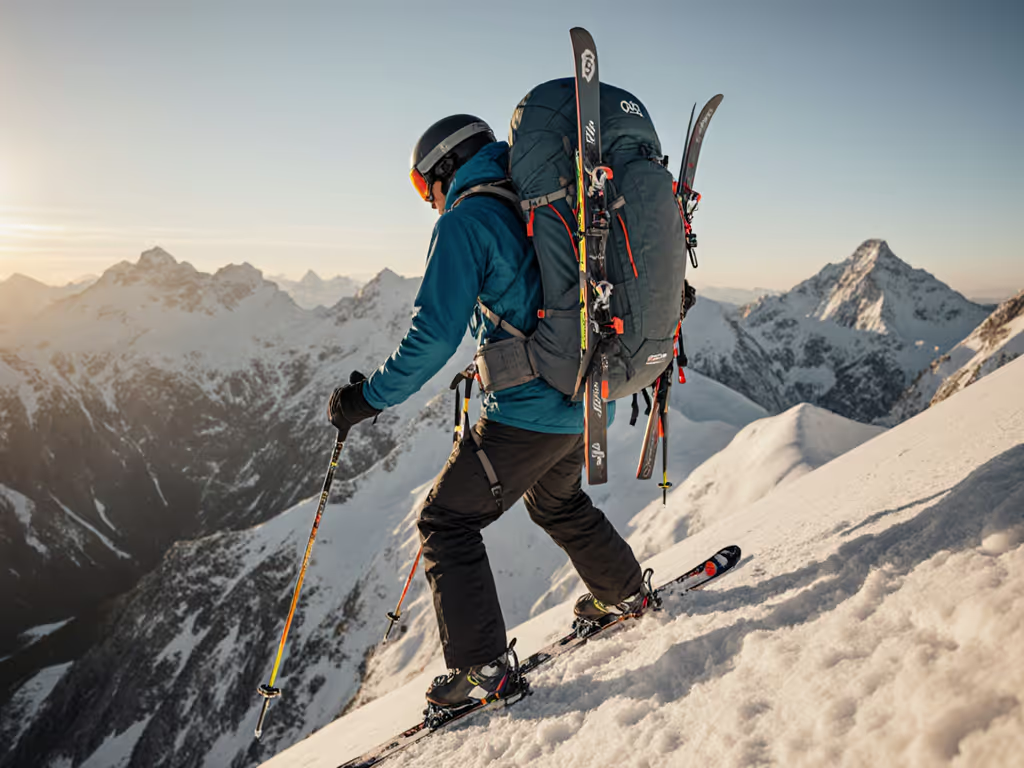
For those using this as a ski mountaineering pack, the streamlined profile shines where bulkier designs hinder movement. Unlike packs with external frames that catch ski poles or interfere with transitions, the Alpha FL 30's close-fitting design stays out of your way during kick turns and boot packs. The minimalist pocket layout keeps essentials accessible without requiring glove removal, which is critical when your fingers are already freezing.
One feature often overlooked in Arc'teryx Alpha FL pros and cons discussions is the absence of hydration sleeve. If hydration access is a priority, our hydration pack fit guide explains reservoir integration and maintenance across packs. While purists appreciate the weight savings, hikers in hot climates may find this limiting. My solution? Use the front pocket for your hydration bladder and route the tube through a small gap in the roll-top closure. It's not perfect, but it maintains weather protection while providing hydration access.
Arc'teryx Alpha FL Pros and Cons: The Honest Truth
Strengths Worth Every Penny
- Weight-to-durability ratio: At 20.6 ounces, it outperforms packs twice its weight in abrasion resistance
- True alpine mobility: The narrow profile never interferes with arm swing during technical movement
- Hip belt that works: Simple webbing design secures properly across diverse hip shapes
- No-babying durability: Survived cave crawling, rock scrambling, and ice falls without visible wear
- RECCO® reflector integration: Embedded safety feature without adding bulk
Limitations to Consider
- No hydration sleeve: Requires creative solutions for tube routing
- Front pocket size: Too small for larger smartphones or guidebooks (A5 size)
- Limited load capacity: Struggles with sustained loads above 25 pounds
- Price point: Significant investment that requires proper fit to justify
One common misconception I address at fit events is that ultralight means fragile. After subjecting this pack to six months of abuse (including being dragged through scree, stuffed in helicopter cargo nets, and used as a snow seat), the fabric shows zero signs of delamination or seam stress. The durability comes from Arc'teryx's advanced composite construction rather than excessive material thickness.
Real-World Performance: Beyond the Spec Sheet
The "Does It Carry Like It Weighs" Test
Spec sheets tell only half the story. Does a pack feel light when loaded? I tested this by carrying 22 pounds (camera gear plus standard alpine kit) on a multi-pitch climb in Rocky Mountain National Park. The key finding: weight distribution matters more than total load. With proper hip-belt placement, the pack felt like a natural extension of my body rather than an external burden.
What surprised me was how well it handled asymmetric loads, which is critical for photographers carrying one heavy lens. Unlike packs with rigid frames that torque during side-hilling, the Alpha FL 30's flexible structure maintained center of gravity through every movement. The external gear loops held my tripod securely without requiring additional straps.
The Breathability Paradox
Most ultralight packs sacrifice ventilation for weather protection, but the Alpha FL 30 solves this through smart geometry rather than mesh panels. The rigid back panel maintains a consistent gap between your spine and the pack body, creating natural airflow channels. During summer testing in 85°F heat, I stayed remarkably dry compared to traditional mesh-backed competitors.
This design particularly benefits those with sensitive skin or prone to chafing, with no sweaty mesh trapping moisture against your back. The trade-off? Slightly less cushioning than padded competitors, but for alpine travel where every ounce counts, this feels like the right balance.
Final Verdict: Who Should Invest in the Alpha FL 30
After fitting hundreds of bodies and testing this pack across dozens of terrain types, I can confidently say the Arc'teryx Alpha FL 30 isn't for everyone, but it's for more people than most ultralight packs acknowledge. If you prioritize mobility over maximum storage, need reliable weather protection without rain covers, and value adaptive fit over one-size-fits-all sizing, this pack deserves serious consideration.
For those considering this as a ski mountaineering pack, its narrow profile and technical features make it exceptional for resort-to-backcountry transitions. However, if you regularly carry loads above 25 pounds or need hydration integration, you might prefer Arc'teryx's Beta series with its more robust suspension system.
The Alpha FL 30 represents a quiet revolution in technical pack design (not through flashy features, but through respectful attention to how diverse bodies actually move in mountains). As someone who believes comfort is a right, not a privilege, I celebrate packs that adapt to human variation rather than demanding we conform to their geometry.
Before you invest, remember the golden rule of pack fitting: listen to the belt. If your hip belt shifts more than an inch during movement, it's not your body that's wrong, your fit needs adjusting. With proper setup, the Alpha FL 30 delivers unmatched alpine mobility that honors your body's natural movement, letting you focus on the mountains ahead rather than the discomfort behind you.
Related Articles