Hip Belt Pocket Organization That Actually Works
By Diego Nakamura • 5th Dec
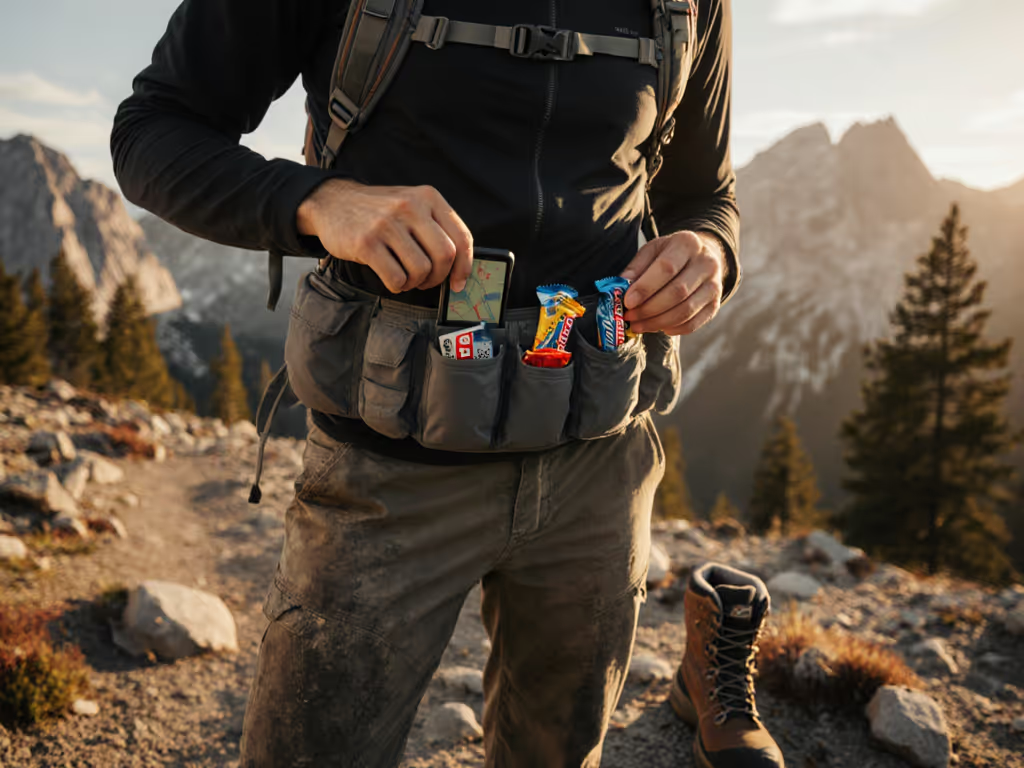
Value is comfort-hours per dollar, not checkout-line price. When your hip belt pocket organization fails mid-hike (phone buried under snacks, first-aid kit unreachable), you're not just frustrated. You're losing trail time. Forget gimmicky pockets that flop or split. True backpack hip belt storage should function like Swiss clockwork: predictable, repairable, and sized for your actual gear. I've seen 15-year-old packs still booking out weekly because their hip pockets outlasted flimsy competitors. Here's how to build a system that lasts.
1. Measure Your Gear, Not the Pocket Specs
Manufacturers tout "50+ cu in capacity," but real-world utility depends on what you carry. Test pockets with your actual gear:
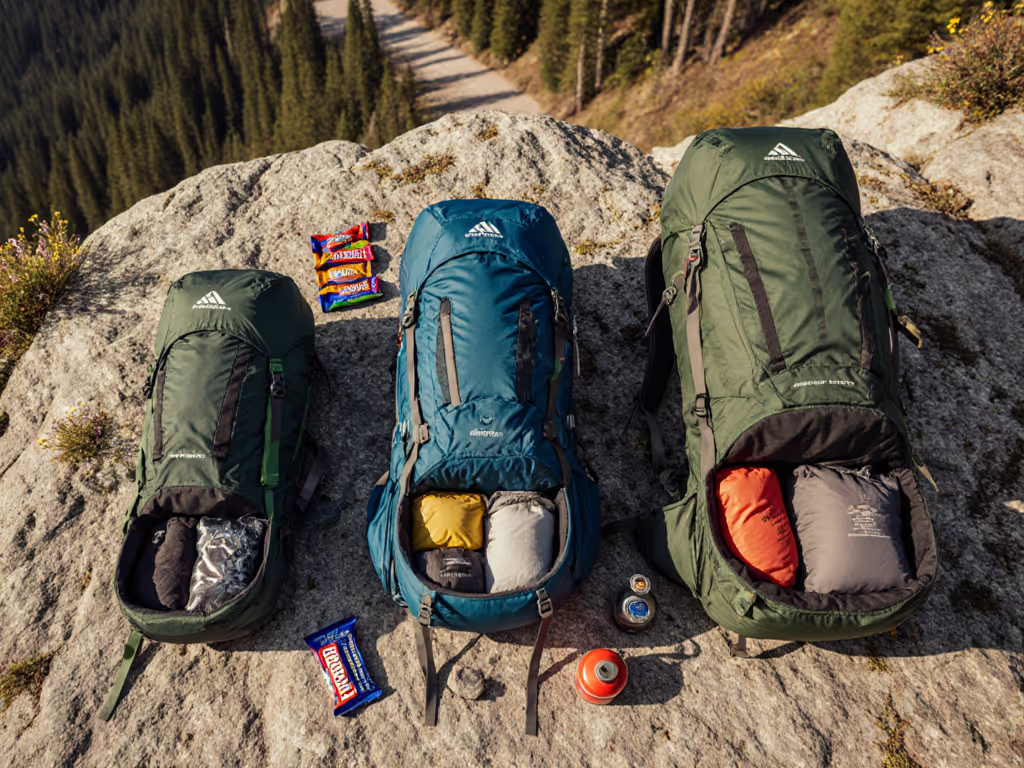
- Phone + case + lip balm: 14.5 cu in (average smartphone with Rugged Case)
- 200-calorie snack + hand sanitizer: 9.8 cu in
- InReach Mini + mini-tool: 7.3 cu in
Most "60 cu in" pockets only fit 40-45 cu in of functional gear before zippers strain.
Clear math: If you carry phone + snacks + safety gear (28.6 cu in total), you need at least 45 cu in of usable space. Anything less forces compartmentalization failures, like cramming an InReach into a water bottle pocket. Measure your essentials with a graduated cylinder. Stop guessing.
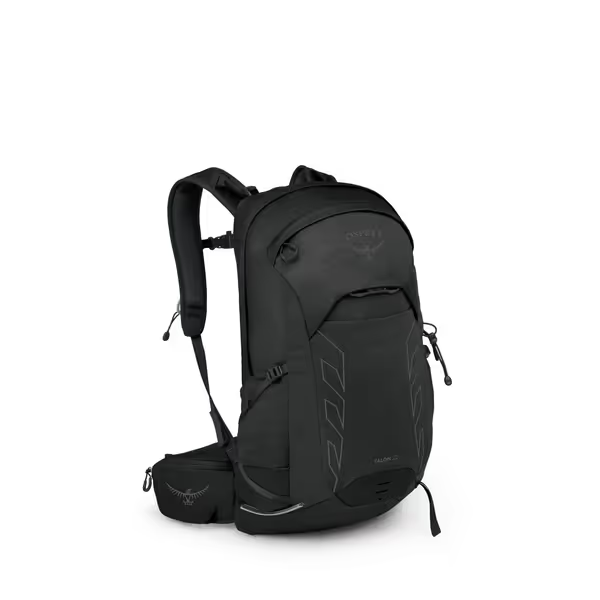
Osprey Talon 22L Lightweight Hiking Backpack
Versatile, lightweight pack with customizable fit for dynamic outdoor activities.
$170
Item Weight2.38 lbs
Item Weight2.38 lbs
Pros
Precise, breathable AirScape suspension for close-to-body comfort.
Micro-adjustable fit adapts to diverse body types and loads.
Surprisingly roomy 22L capacity for day or overnight trips.
Cons
Only 22L, not suitable for multi-day heavy loads.
Hipbelt pockets may be limited for some users.
Customers find this backpack well-made and comfortable, with one mentioning the adjustment straps make it extremely comfortable. They appreciate its size, noting it's surprisingly roomy for its 22L capacity, and find it very light. They like its portability, with one customer mentioning it's great for day or overnight hikes.
Customers find this backpack well-made and comfortable, with one mentioning the adjustment straps make it extremely comfortable. They appreciate its size, noting it's surprisingly roomy for its 22L capacity, and find it very light. They like its portability, with one customer mentioning it's great for day or overnight hikes.
2. Verify Access Under Load - Not Just Empty
A pocket that's easy to open with an empty pack becomes useless at 30 lbs. Hip belts torque during side-hilling, compressing pockets against your body. Here's the field test:
- Load pack to your typical weight (e.g., 25 lbs for weekend trips)
- Hike 1 mile on varied terrain
- Time how long it takes to retrieve:
- Phone (while walking)
- Snack (without stopping)
- Emergency item (e.g., whistle)
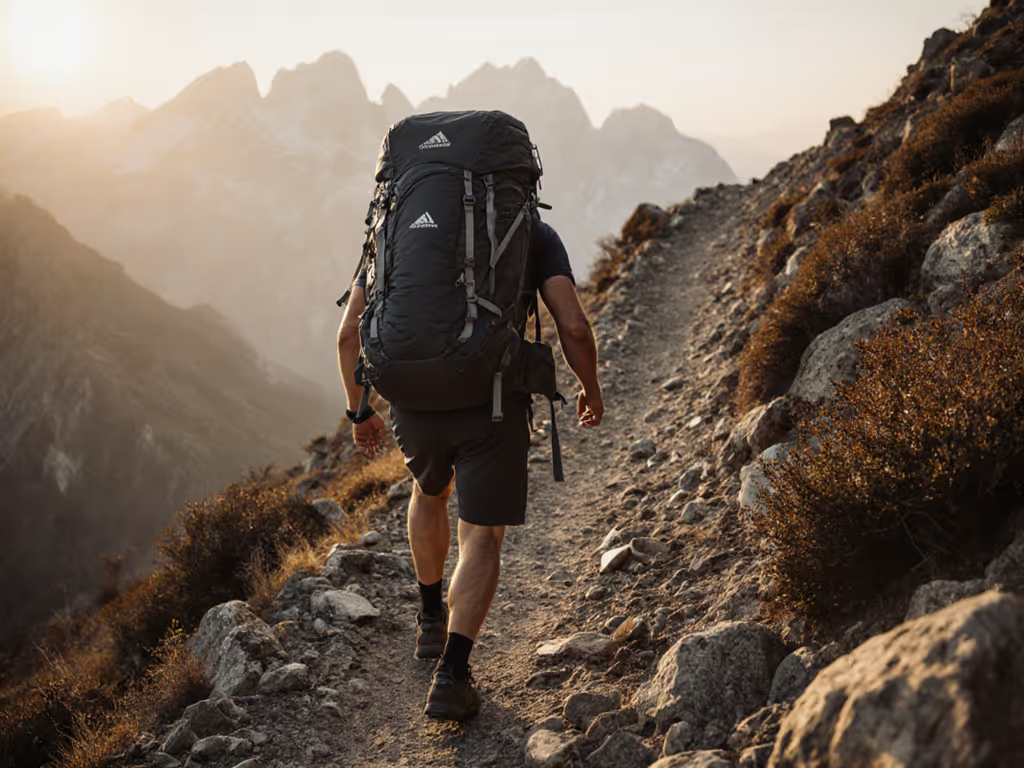
If #3 takes >5 seconds, the pocket fails safety-critical access. Osprey's Talon series passes this with dual zippered hip belt pockets angled for draw-under-load access, but only if tension straps are adjusted correctly. Explicit assumption: Hip belts must sit on iliac crests, not the waist, for consistent pocket positioning. Misfit belts = impossible access.
3. Prioritize Replaceable Attachments Over Permanent Stitching
Hip pocket essentials should outlive your pack, but rarely do. Why? Most pockets use single-stitch elastic bands that degrade in UV. Compare attachment systems:
| System Type | Failure Point | Replacement Cost | Avg. Lifespan |
|---|---|---|---|
| Elastic bands (common) | Band snaps | $0 (but pocket useless) | 18-24 months |
| Adjust-a-clip (SWD, REI Co-op) | Plastic clip | $3.50 (sold separately) | 5+ years |
| Daisy-chain loops (Seek Outside) | Stitch tear | $8 (replace loop) | 3+ years |
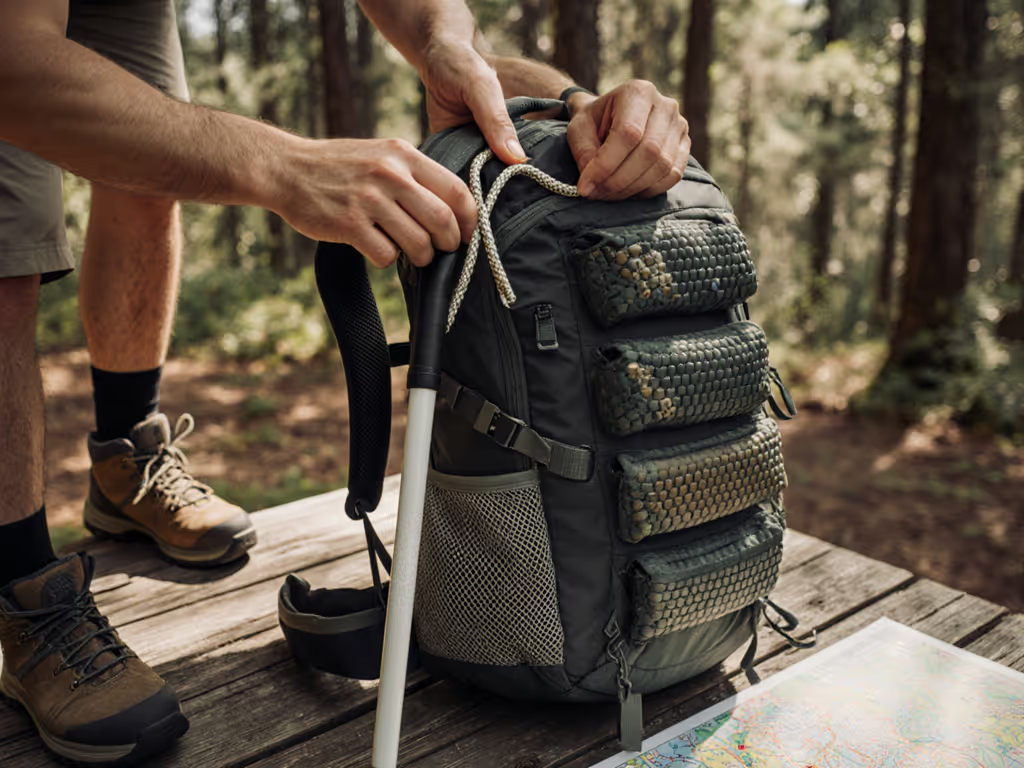
The REI Co-op Packmod ($14.95) uses removable buckles (replace straps yearly for pennies). My library packs used these exclusively; pockets swapped between packs survived 3x longer than sewn-in versions. For a curated list of hip belt organizers and other add-ons, see our accessories guide to upgrade any pack without sewing. Lifecycle framing: Spend $15 now to avoid $50 pack replacement later. What fails first? Always the attachment method.
4. Match Pocket Size to Your Body Geometry
"Universal fit" pockets ignore body diversity. Hip pockets must clear:
- Curvy hips: Add 1.5" to pocket width
- Petite frames: Reduce height by 0.75" to prevent sag
- Broad torsos: Orient zip pull downward to avoid rib interference
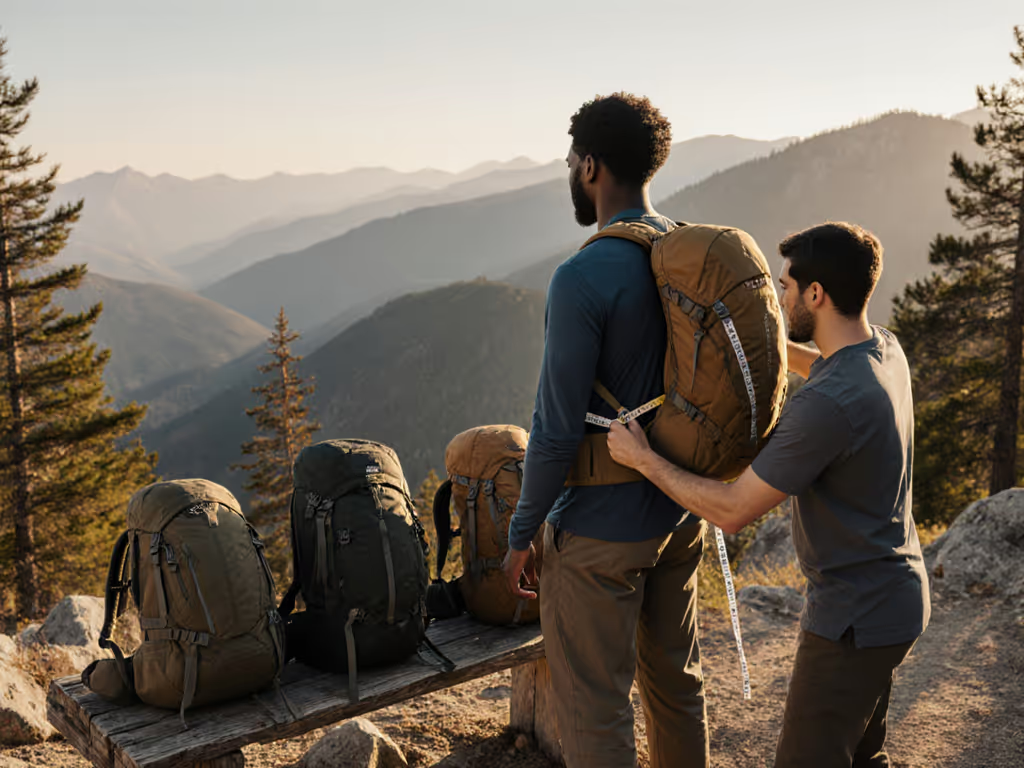
I've seen women ditch packs because standard hip pockets hit hip bones during descents. Get a better baseline fit with our women-specific pack fit guide to keep pockets clear of hip bones. Clear math: If your hip belt spans 14" (measured while loaded), pocket width shouldn't exceed 6.5", leaving 0.75" clearance on each side. No more rotation or bruising. Use hip belt pockets with adjustable tension like SWD's (50 cu in, waterproof) that slide on daisy chains. Test fit with loaded pack before buying. If you're unsure about sizing, use our torso length measurement guide to confirm belt height and pocket clearance.
5. Calculate Lifetime Cost Per Comfort-Hour
Stop comparing MSRP. True cost is backpack hip belt storage cost ÷ (years × hikes/year × hours/hike). Example:
- Flimsy $10 pocket: Fails at 18 months (36 hikes). 2 hrs/hike = 72 comfort-hours. Cost: $0.14/hr
- Serviceable $18 pocket: Lasts 5 years (200 hikes). 2 hrs/hike = 400 comfort-hours. Cost: $0.045/hr
The pricier option saves $7.20/year, but more crucially, gains 328 comfort-hours. That's 8 extra weekend hikes without pocket failures. Explicit assumption: Replacements cost time (shipping, installation) not reflected in MSRP. Factor in 15 mins/hike for fussing with failed pockets. To reduce fiddling further, use our pack weight distribution pro tips to stage heavy and frequent-use items for efficient access.
Final Verdict: Build Systems, Not Afterthoughts
Hip belt pocket organization isn't about cramming more gear, it's about reducing friction per trail mile. The winning formula:
- Size pockets for your actual essentials (not marketing specs)
- Verify access under real load
- Demand replaceable parts (clips > elastic)
- Adjust for body geometry (no cookie-cutter fits)
Invest in modular systems like the REI Co-op Packmod or SWD's zippered pockets. They're not the cheapest, but they'll outlast 3 disposable alternatives. Your calendar will thank you when that same pocket sees its fifth season of trail use. Because value isn't what you pay. It's comfort-hours per dollar... and what fails first.
Related Articles