Geocaching Backpacks Compared: Fit & Storage
By Kwame Adu • 23rd Mar
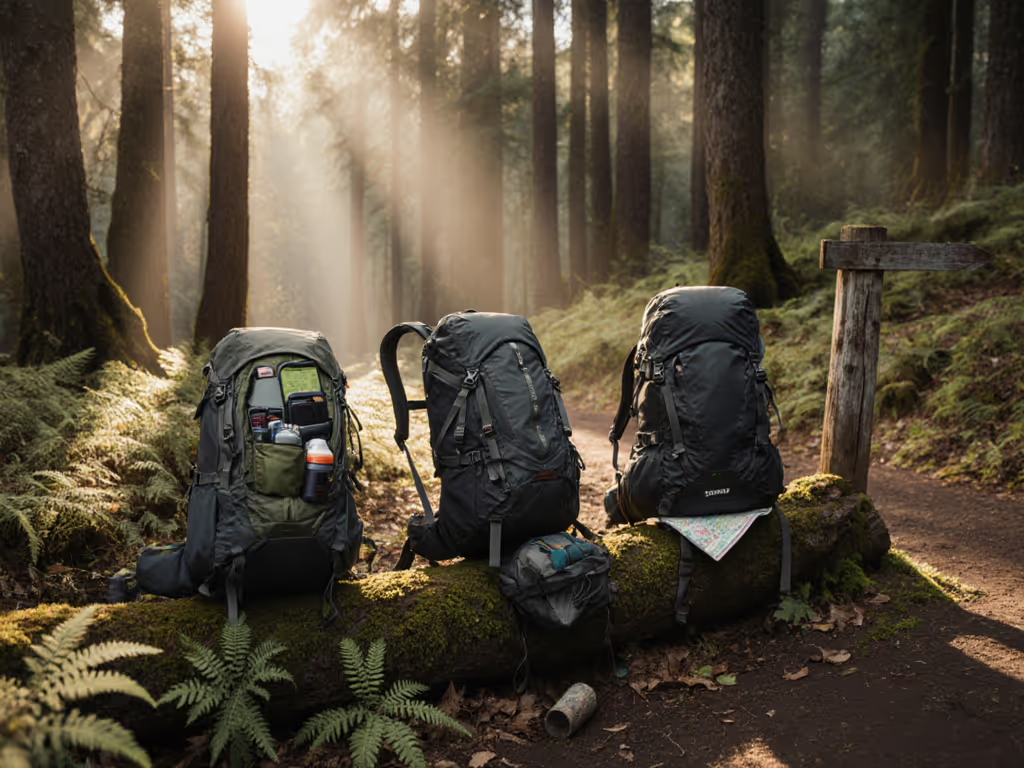
When you're hunting for treasure on the trail, your pack isn't just hauling weight (it's a mobile workbench). You need logbook access, organized compartments for trade items, room for cache containers you might salvage, and a frame that stays stable on scrambles where you're crouching and bending to read coordinates. Most general-purpose backpacks miss the mark here, and that's where specific planning matters.
This comparison cuts through marketing language and focuses on what actually works in the field: fit geometry for real bodies, storage that serves geocaching workflows, and hardware that doesn't fail when you're ten miles out. I've tested these principles on trail crews and in our repair shop, and I've seen firsthand how the right pack design (built from standard, replaceable parts) keeps you functioning when gear gets beat up.
What Makes a Geocaching Backpack Different
Geocaching demands a different priority stack than thru-hiking or general camping. You're not optimizing for one big summit push; you're optimizing for repeated access, low-to-moderate volume, and organizational flexibility.
Access patterns matter first. You'll open your pack dozens of times per outing to swap out trade items, stash a found logbook, pull out a pen, or temporarily store a larger cache container. A pack with a large main opening and multiple compartments beats a single, cavernous sack. Side or front access lets you reach gear without unpacking your entire load.
Storage segmentation is non-negotiable. Logbooks, pens, and trade items need logical homes. Wet items (used cache containers, muddy trinkets) should separate from dry gear. A pack that offers 4-6 external or internal pockets and clear compartment walls lets you build a system instead of rummaging.
Stability under variable loading prevents fatigue. On a hunt, you might start with a 20-pound pack and finish with 25 pounds after collecting caches. You'll also be bending, twisting, and stepping sideways on uneven terrain. A pack with a rigid or semi-rigid frame and proper load lifters keeps the load centered, reducing shoulder and lower-back strain across trips that involve frequent micro-movements rather than steady-state forward hiking.
Hip-belt utility gets overlooked. Geocachers benefit from substantial hip-belt pockets large enough to hold a multi-tool, compass, or small trade items you pull out every few minutes. Standard geometry matters: a properly fitted hip belt takes 60-70% of the load off your shoulders, and it needs to stay put during crouching and reaching.
How to Measure Your Fit Baseline
Before comparing packs, you need your numbers. Fit failures stem from mismatched torso length and hip-belt size, not brand loyalty.
Find your torso length. Bend forward slightly. Locate the bony knob at the base of your skull (C7 vertebra). Mark it. Then find your hip crest (the topmost point of your pelvis). Measure straight down. Most people fall into 16-22 inch ranges, though outliers exist. This measurement (not your shirt size) determines whether a pack's load-lifter angle and shoulder harness sit correctly. For step-by-step sizing, use our torso length measurement guide.
Measure your hip circumference. Wrap a soft tape around your natural waist (where you wear pants), not your hips. Packs typically come in S (26-32 in.), M (30-36 in.), and L (34-42 in.) hip sizes. A snug fit is correct; too loose and the load shifts, too tight and the belt cuts off circulation during long carries.
Test in a store with weight. Use a sandbag or a pre-loaded pack that matches your typical geocaching load (18-28 pounds). Walk stairs, bend down, rotate your torso. Numbness in hands, shoulders rolling forward, or hip-belt ride-up signal poor match. Most people can tell within five minutes.
Comparing Storage Architecture
Geocaching packs typically fall into three categories based on volume and access style.
Compact Day Packs (18-35L)
These suit casual hunters hitting a dozen caches in a few hours. Look for:
- Multiple external pockets: At least 4-6, with clear sizing. Hip-belt pockets should hold a multi-tool or pen without shifting during side-hilling.
- Top and side access: You don't want to fully open the main compartment to reach a trade item.
- Lightweight frame: 2.5-4 pounds. A rigid internal frame (plastic, carbon-fiber struts) or external frame guide prevents slouching at 20+ pounds.
- Durable pocket zippers: Tested examples include YKK Vislon (widely serviceable) and quality pull-tabs that don't catch.
Common compact choices include ultralight touring packs and minimalist day packs that accept modular attachments. The trade-off: lower back support at 25+ pounds and minimal compartmentalization unless you add aftermarket organizers.
Mid-Range Adventure Packs (35-55L)
Many geocachers choose this zone for half-day to full-day hunts, especially trips combining hiking with cache hunting. Attributes to evaluate:
- Tiered compartments: A distinct upper and lower chamber (or upper, middle, and lower) lets you organize by trip duration and cache type. Internal dividers prevent gear from settling into a mushy pile.
- Front and side pockets: One large side panel or front-zip panel speeds access without full unpack. Internal organizational sleeves (laptop or document compartments) work well for logbooks and trade-item collections.
- Load lifter accuracy: Angle matters. If the load lifters pull backward at 45° or steeper, they'll lift the pack off your hips under load and cause trap muscle fatigue. Test with weight. Dial them in with our load lifter adjustment guide.
- Hip-belt load transfer: A pack in this volume range should deliver 60-70% of weight to your hips via a molded, well-padded belt. Cheap belts (thin, non-articulating) fail by mid-season.
- Typical weight: 3.5-5 pounds for a non-ultralight option with durable fabric and frame.
This tier balances accessibility, organization, and carry comfort. A fact confirmed by field observations is that most geocachers gravitate here because it handles both day outings and 2-3 day trips without overbuilding.
Technical/Expedition Packs (55L+)
Reserved for multi-day treasure hunts, remote areas, or combined hiking trips. They offer:
- Dual or triple compartments: Some models include a separate meat shelf (borrowed from hunting pack design) that can hold bulky, dirty items like salvaged caches or wet logbooks.
- External attachment systems: PALS webbing or daisy chains let you clip cache containers, poles, or extra pouches on the exterior, preserving interior volume for personal gear.
- Frame rigidity: A robust internal or external frame handles 35+ pounds and supports extended wear without bottoming out.
- Sewn, reinforced stress points: Hardware attachment points, zipper anchors, and seam terminations should show overwinding or bar tacks (visible stitching that locks stress).
Standard parts make trailside fixes boring, and that's good.
Larger packs built with standard zippers, modular hip belts, and published repair guides cost more upfront but pay dividends over years. A shattered hip-belt buckle on a 12-mile remote treasure hunt can be swapped for a standard ITW (Duraflex, Fastex) buckle in five minutes if you carry spares and a pack of that design.
Comparing Fabrics & Durability Under Use
Geocaching subjects packs to wear patterns distinct from backpacking. You're setting the pack down repeatedly on rocky ground, brushing it through brush, and filling it with dirty cache containers.
Fabric weights and abrasion resistance:
| Fabric Type | Weight | Abrasion Grade | Best For | Typical Trade-Off |
|---|---|---|---|---|
| 210D Nylon | Lightweight (3-5 oz/yd²) | Moderate | Day to overnight trips, smooth terrain | Snags easily on rough rock; prone to puncture if overloaded |
| 420D Nylon | Mid-weight (6-8 oz/yd²) | Good | All-day hunts, mixed terrain | Heavier, stiffer; slower to dry |
| 500D Cordura Ripstop | Durable (9-12 oz/yd²) | Excellent | Multi-day trips, rocky/brushy areas | Cost premium; takes time to break in; can hold odors if wet-cached |
| X-Pac composite | 4-6 oz/yd² | Very good | UL multi-day and wet climates | Higher cost; limited repair network; delamination risk after 5+ years |
For geocaching, 420D nylon or 500D Cordura Ripstop hit the durability-to-weight sweet spot. Both are repairable (duct tape field fix, seam-seal touch-up, or patch kit repair) and widely available as replacement panels or spare fabric from manufacturers or outdoor repair shops.
Avoid ultra-light composites (X-Pac, Dyneema) unless you're certain you won't be dragging the pack across rock or storing wet items inside. These materials degrade under abrasion, and repair options narrow. For a deeper dive into materials, see our backpack fabric science guide.
Storage Layout & Accessibility: Practical Comparisons
Let's map how three real-world pack architectures handle geocaching workflows.
Example 1: Traditional Day Pack (Side Access, Single Large Compartment)
Pros: Simple, fewer failure points. One big zipper is easier to repair than five.
Cons: You're digging for trade items every cache. Wet logbooks sit against dry food. Hard to organize 20+ cache containers you've collected.
Use case: Casual hunters doing 5-10 caches, staying within 5 miles, light rainfall.
Example 2: Tiered Compartment Pack (Top + Main + Side Pocket)
Pros: Top section holds pen, multi-tool, and current trade item. Main chamber stores gear and found caches. Side pocket reaches water bottle or a quick-grab item. Organizational dividers keep wet and dry separated.
Cons: More zippers (more failure points, more weight). Slightly larger footprint for equivalent volume.
Use case: Half-day to full-day hunts, 15-30 caches, varied terrain. Most geocachers thrive here.
Example 3: Expedition Pack with External Attachment Points
Pros: Clip bulky cache containers to exterior webbing. Modular hip-belt storage. Internal compartments stay organized. Supports gear customization via removable organizer pouches.
Cons: Higher cost. Overkill for casual hunters. More gear to maintain.
Use case: Multi-day trips, remote areas, collectors managing 50+ caches over 3-4 days.
Frame Type: How It Affects Your Carry
Frame choice influences how your pack behaves at full load, especially on uneven terrain.
Internal Frame (Most Common) Aluminum or composite stays run vertically inside the pack, often integrated with foam or mesh ventilation panels. Closer carry, more stable on technical terrain, easier to compress when partly full.
Best for geocaching: Yes. Internal frames excel at adaptive loading (you can carry 15 pounds or 30 pounds in the same pack without slop). Load lifters pull the pack tight against your back when you're scrambling and reaching for cache containers.
External Frame (Rare in Modern Packs) Frame sits outside the pack, lifting it away from your back. More air circulation, rigid structure.
Best for geocaching: Overkill and outdated. External frames are heavier and interfere with brush.
Frameless or Ultralight Flexible fabric and minimal internal structure. Requires careful packing to avoid slouching.
Best for geocaching: Only if you're committed to ultralight discipline and rarely exceed 20 pounds. Most geocachers find the lack of back support problematic at 25+ pounds.
Fit Challenges by Body Type
Backpack sizing, even within S/M/L frames, doesn't accommodate everyone fairly. Here's where critical evaluation matters.
Short torsos (under 16 inches): Load lifters often angle too steeply, pulling the pack upward and off your hips. Test by wearing the pack at claimed capacity and having a friend check if the load lifters are pulling at roughly 45° from the shoulder harness. If steeper, the pack won't transfer weight efficiently.
Broader shoulders or fuller chests: Sternum strap placement can dig into soft tissue if the pack is too narrow. Check that the sternum strap sits 1-2 inches below your collarbone, not pressing into the chest. Some packs (especially men's-cut models) don't accommodate this well.
Straight waists and larger hips: Hip belts can slip during load transfer. If your waist and hips are similar in circumference, you may need a pack in the lower hip-size range but longer torso. Measure both and communicate this to a fit specialist.
Plus-size frames: Limited options in mainstream brands. Larger packs (L/XL hip belt, extended torso) exist but scatter across brands. Check publicly shared fit databases and reviews from bodies similar to yours; generic store testing won't capture your real carry experience.
Durability & Repairability: The Long View
A pack bought for $300 becomes a bargain if it's serviceable for 7-10 years. A pack bought for $150 and replaced after 18 months is expensive.
Ask before buying:
- Are hip-belt straps removable and replaceable?
- Do they stock spare zippers, and can you identify the zipper model (YKK Vislon, SBS, etc.)?
- Are shoulder harness straps glued or stitched? (Stitched is better; glued fails faster.)
- Is there a published repair guide or repair partner network?
- What warranty applies to frame breakage?
A recent conversation at our community repair shop revealed that packs with proprietary buckles or integrated harness systems (non-replaceable as modules) get retired far sooner than packs with standard ITW fasteners or snap attachments. Standard hardware wins, not because it's cheaper, but because you can fix it on the trail or source parts quickly. Keep your pack going with our hiking backpack maintenance and repair guide.
Making Your Choice
If you hunt caches casually (1-2 outings per month, 10-20 caches, day trips), a mid-range 40-50L pack with side access and tiered compartments will serve you best. Fit matters first: confirm torso and hip-belt size in-store under load. Then assess pocket count, zipper quality, and whether the hip belt has clear, padded load transfer.
If you're a serious collector doing multi-day trips or complex hunts, invest in a 55L+ pack with external attachment and modular storage. Durability and repairability become key. Verify that the frame, zippers, and hip belt are standard parts or published service items.
For everyone: try the pack on with 20-28 pounds (your typical cache-hunting load), walk stairs, bend down, rotate your torso. Numb hands, shoulder bite, or hip-belt slippage are disqualifiers, not quirks to tolerate. A good fit reduces fatigue, prevents injury, and means you'll actually keep the pack in service instead of upgrading every two years.
The pack that fits your body, serves your workflow, and uses replaceable components won't be flashy. But it will be there for your next hunt, and the one after that.
Related Articles