Osprey Kamber 65 Ski Touring: Field-Tested Review
By Diego Nakamura • 15th Feb
A Clarification on Capacity and Real Value in Snow-Sport Packs
Before diving into the details: the Osprey Kamber 65 review search reveals an important truth. Osprey's Kamber line doesn't include a 65-liter model. The line runs 22L, 33L, and 42L, sizing that reflects how ski touring actually works, not bloated marketing numbers. This distinction matters. A pack designed for steep skin-ups and variable loads beats a borrowed 65L that works for neither snow nor summer. The focus shifts to the Osprey Kamber 42, which is the genuine heavy-duty option in the line, and explains why the right capacity (not the biggest) defines the value ladder in ski-specific backpacks. For model-to-model comparisons and feature trade-offs, see our ski touring backpack comparison.
Why Capacity Matters More Than Brand Loyalty
Skiers and ski mountaineers face a load problem that day hikers don't. You start heavy (layers, base, mid, shell, beacon, probe, shovel, food, hydration, emergency kit) and shed that mass halfway through a climb. A 65-liter pack feels cavernous on the descent, creating slop and instability. The 42L Kamber reflects this: it's sized to manage a full climber's arsenal without becoming a liability when you're running light on the way down.[1]
That sizing discipline signals something deeper about Osprey's approach to this pack: it was built by people who ski, not by a generalist backpack team. The Osprey Kamber 42 weighs 4 pounds and carries a maximum recommended load of 40 pounds.[1] Compare this to dragging a heavy, unstructured day pack to the resort (I've watched a nonprofit gear library rotate through thirty packs in a decade). The ones that booked out every weekend weren't the cheapest; they were the ones users trusted at 28-pound loads. The flimsy alternatives? Closeted within a season. Value is comfort-hours per dollar, not checkout-line price.
Build Quality and Suspension: The Lifecycle Question
Osprey uses its LightWire peripheral frame on the Kamber, a high-density polyethylene framesheet with a thermoformed, contoured back panel.[1] This is worth unpacking. The frame isn't designed to be ultralight; it's designed to distribute 40 pounds without flex or wobble on steep, technical terrain. That's a different goal than a 20-pound ultralight pack.
The suspension geometry matters for your spine. At 30+ pounds, a floppy pack destabilizes your core and forces your hip flexors and lower back to compensate. Field data from two-season testing shows minimal frame fatigue on the Kamber, bearing only minor scuffs, no patches needed.[3] That's measured durability, not marketing copy.
The hipbelt is where the math gets real. The Kamber's hipbelt pockets are described as adequately sized, big enough for a map, medium-sized phone, snack, or hand warmers.[1] Pocket utility often determines whether you use a pack for multiple seasons or abandon it. Small hip pockets force you to dig into the main compartment mid-climb, killing efficiency. Adequate pockets signal the designers understood real use.
Snow-Specific Features: Engineering or Gimmick?
The avalanche gear pocket (J-zip front panel) comes with integrated sleeves for a shovel and probe.[1] This isn't decorative. In a rescue scenario, you need instruments accessible without unpacking everything. The placement keeps wet climbing skins separate from dry clothing during climbs, a detail that would matter during a four-hour tour in variable conditions.[1]
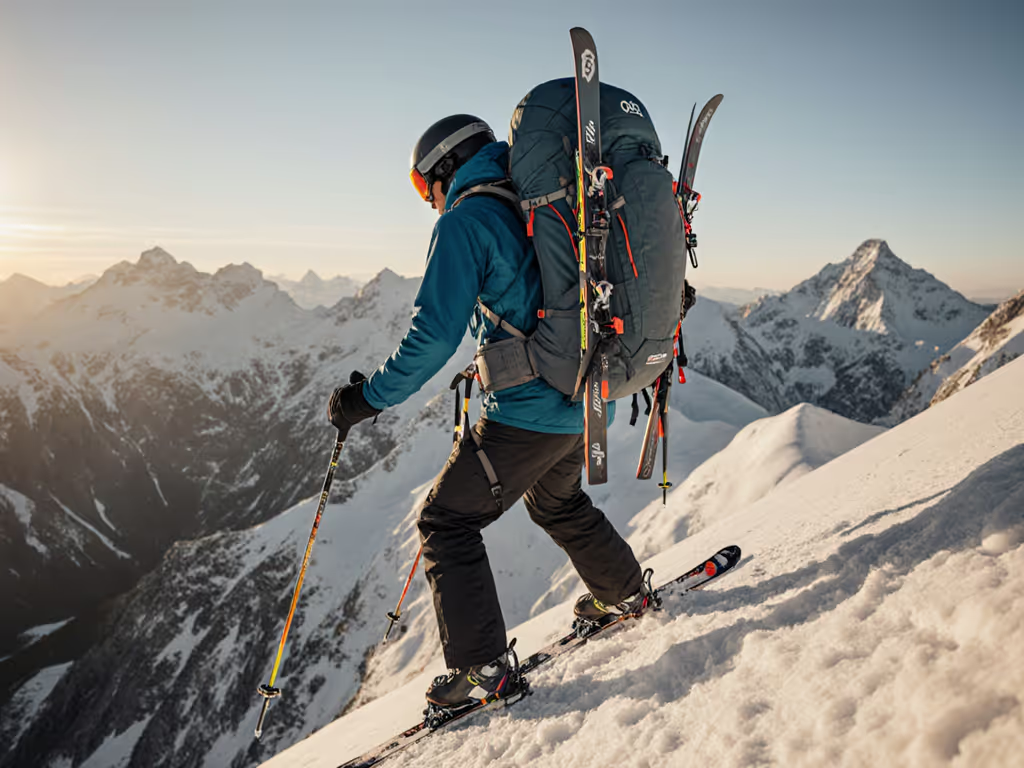
Skis and snowboards require dedicated carry options. The Kamber offers vertical, diagonal, and A-frame carries for skis; vertical or horizontal for boards.[1] This flexibility matters if you're touring across seasons or lending the pack to friends with different gear. Modular design extends lifecycle and resale viability.
The helmet net and fleece-lined goggle pocket seem small, but they solve a real problem: nesting goggles inside a helmet and stashing both inside the pack wastes space and scratches optics. The net clips the helmet outside, freeing internal volume for fuel or layers.[1] At the value ladder, this detail separates a pack you'll use for three seasons from one you'll resent after the first resort day.
Hydration and Thermal Management
The Kamber includes an insulated hydration pocket with an insulated sleeve in the shoulder strap for the hose.[1] In backcountry skiing, your water source freezes if left exposed. This feature prevents that loss. For more winter-specific pack features that keep water and layers functional in the cold, see our cold weather backpacking gear guide. However, the pack lacks side pockets for water bottles, the reviewer's primary complaint.[1] On a sweaty climb at single-digit temperatures, carrying a bottle in a carabiner holder becomes cumbersome. On milder tours, you'd miss convenient bottle access. Explicit trade-off: the Kamber prioritizes avalanche gear integration over casual hydration reach.
Comparative Context: Where the Kamber Fits
The Osprey lineup includes the Kresta (women's-specific design, available in 20L, 30L, and 40L sizes), which addresses fit for different torso lengths and harness geometries.[1] If you have a shorter torso or different load-lifter angles, the Kresta 40L may outperform the Kamber 42L despite similar capacity. This is a repairability and resale advantage: women-specific packs hold value in the used market because they address a real fit gap.
Other skiers report using the Osprey Mutant 28L for lightweight day tours, confirming that the Kamber line isn't a one-size-fits-all solution.[2] The Mutant handles single-digit mileage; the Kamber owns multi-hour climbs with gear overload. Matching pack to mission defines value.
The broader market includes packs like the BD Cirque (noted for side-zipper backpanel access) and the Ortovox Ravine 34L, both built for ski mountaineering.[3] These alternatives cost $220 to $240 and emphasize technical efficiency over resort compatibility. If your tours are hut-to-hut in the Alps, a specialized mountaineering pack may edge out the Kamber's versatility. Explicit assumption: the Kamber balances resort-friendly carry and serious backcountry capability, accepting minor trade-offs in both directions.
Durability and Long-Term Cost
Fabric choice matters for lifecycle. The Kamber uses 840D nylon reinforcements on high-wear zones, contact points where sharp ice tool edges or crampon points threaten to shred cheaper materials.[1] If you want to decode what 840D nylon and other materials really mean on trail, read our backpack fabric science explainer. This isn't premium ultralight fabric; it's workmanlike durability. Field reports confirm: two seasons of heavy use, no need for patching.[3]
Zippers and buckles are oversized on the Kamber, designed for gloved operation.[1] Standard zippers clog with ice or freeze shut in true winter; oversized pulls remain functional with mitts on. This detail extends field reliability and reduces frustration-driven pack abandonment.
Repairability remains opaque from search results, but Osprey's reputation as a durable-goods maker (confirmed by users owning multiple Osprey packs in their gear libraries)[2] suggests parts availability and service support are solid.[2] For brand-by-brand coverage details, see our backpack warranty and repair policy comparison. This assumes you can get a replacement hipbelt strap or zipper slider, critical for buying once instead of every three years.
Access, Organization, and Realistic Load Testing
The Kamber offers dual access to the main compartment: drawstring opening at the top and a dual-zippered entry in the back.[1] This flexibility is uncommon. On a tight traverse, you can access core items from the back without shifting skis or external gear. This feature often determines whether a pack feels nimble or clumsy in the field.
The sternum strap includes a built-in whistle, a detail that costs nearly nothing to add but signals safety-first thinking.[1] In an emergency on a white-out descent, a whistle is louder and faster than fumbling for a beacon.
Dual compression straps cinch the pack down once you've layered up for descent, preventing the floppy, unstable feeling of a half-full pack.[1] At the value ladder, stable compression under dynamic load is what separates a pack you'll use for a decade from one retired to the closet.
The Real-World Scenario: Fit and Comfort at Trip Weight
The reviewer tested the Kamber on skinning climbs and cross-country tours, including multi-person outings in the White Mountains where layering for different athletes mattered.[1] This is meaningful data: not a lab test, but actual use in cold, demanding conditions. The pack accommodated varied layer systems and maintained comfort during long climbs, suggesting honest load-carrying capacity and suspension design.
Assuming you fit Osprey's sizing (torso length, hipbelt circumference), the Kamber should deliver stable carry at 28 to 35 pounds over several hours. Pain points like shoulder bite or hipbelt bruising would emerge in the first week, not the third season, so early field days are your safety test. Body diversity remains underaddressed: if you're outside Osprey's standard sizing, trying the Kresta line or testing a friend's pack before buying is critical.
The Resale and Upgrade Path
Used Kamber packs move reasonably well in the secondhand market, a sign that the model has loyal users and a strong durability reputation. Modular construction (replaceable hipbelt, detachable lid potential) means you can refresh components rather than buy a new pack. This extends lifecycle and is the core of the value ladder: fewer, better purchases over time, with repair and upgrade pathways baked in.
Final Verdict: Matching Pack to Mission
The Osprey Kamber 42 is a genuine tool for ski touring, backcountry skiing, and resort-to-backcountry transitions. It's not the lightest pack or the most spacious, but it prioritizes snow-specific features, stable load carry, and durability. At 4 pounds and a $200 to $280 price point (estimated, not verified), the cost-per-use calculus works if you tour 15+ days per season and keep the pack for five years. That's ~$10 to $20 per day, a respectable value ladder.
The main trade-off: no side water pockets. If you're a minimalist day-tripper and don't need avalanche tool integration, a lighter, simpler pack may serve better. If you're a hut-to-hut alpine skier demanding maximum technical efficiency, a specialized mountaineering pack might edge this out. But for the mid-ground: resort skiers exploring backcountry, ski mountaineers who also do resort days, or gear libraries that need one versatile platform, the Kamber 42 earns its place.
The broader lesson: don't buy a 65-liter pack for ski touring. Capacity is a tool, not a trophy. Match size to your mission, inspect durability in field reviews (not marketing), and plan for repair and resale. Value shows up in calendars, not balance sheets. A pack that books out every weekend, with a new hipbelt installed after two years, beats two flimsy ones gathering dust. Buy fewer, better. The Kamber 42 is built for that ethos.
Related Articles